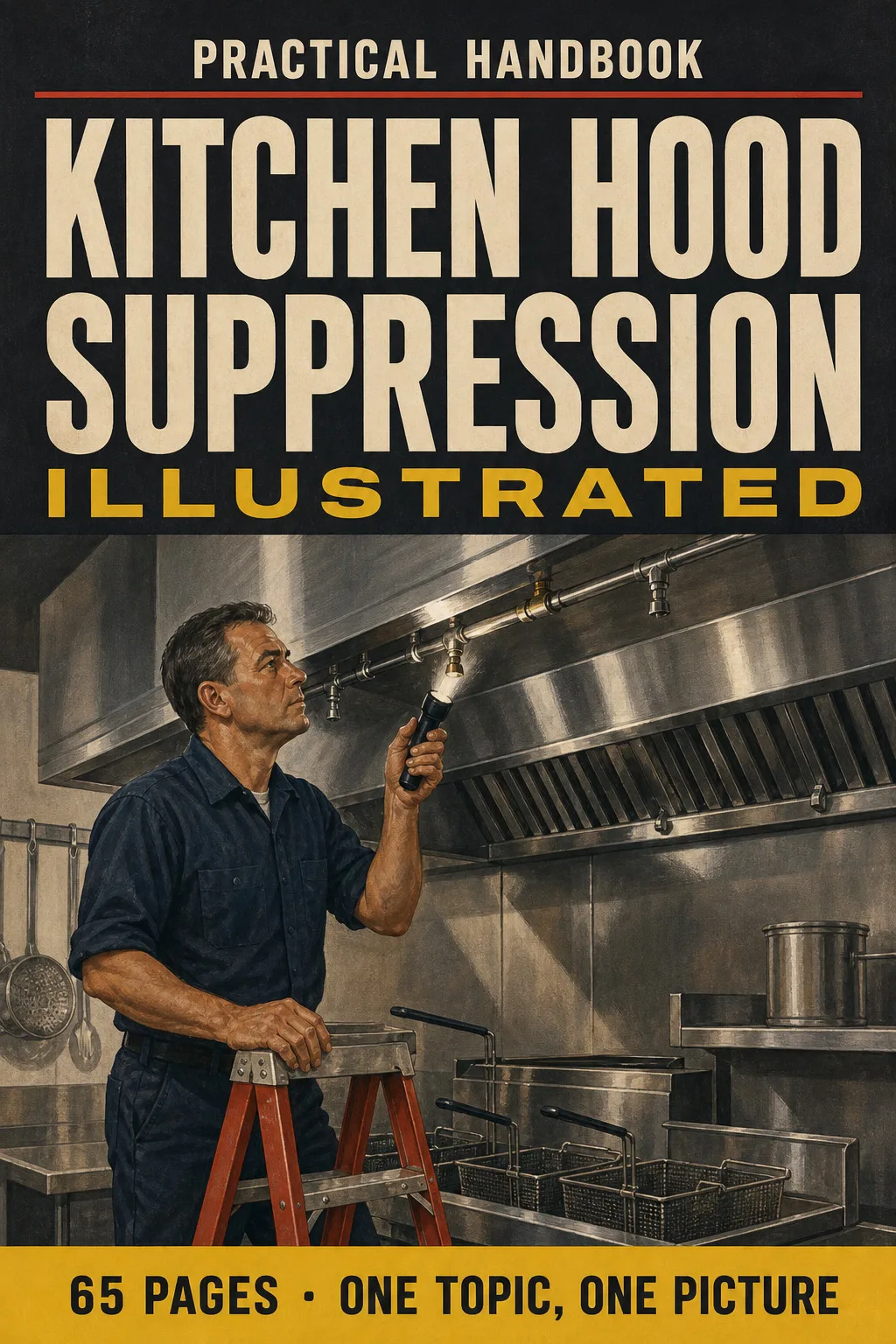
📄 Digital book in PDF · read it on your phone or print it
Agent cylinder, regulated release, detection line, fusible links, plenum and duct nozzles, appliance coverage, gas and electrical shut-offs, the semiannual service. Every topic gets its own page: the drawing first, then what you need to remember. 65 illustrated pages.
🔒 Secure checkout · PDF by email · 30-day guarantee
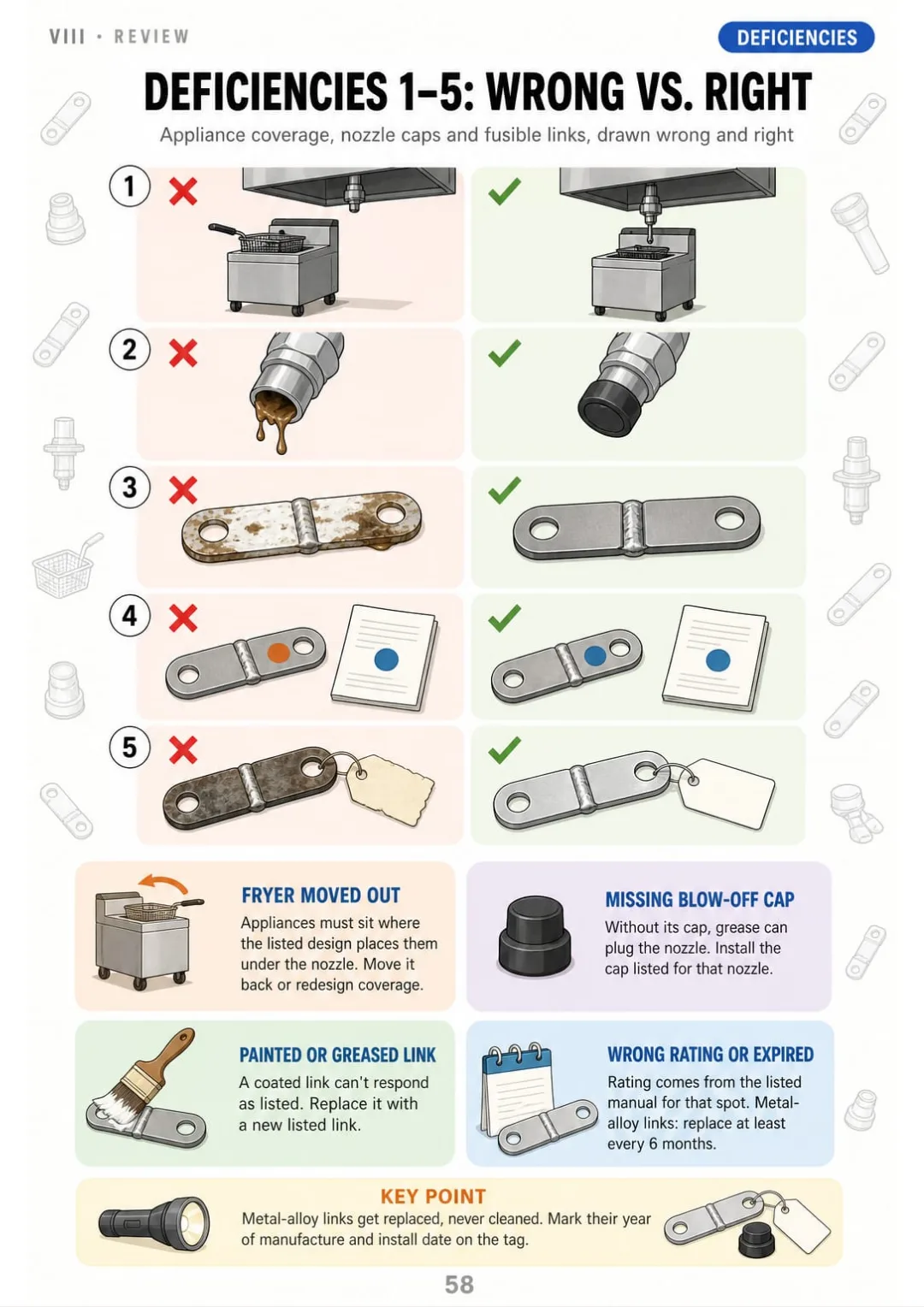
Every page has one big drawing and a box with the numbers and steps you need to know:


Swipe to see more →
These are real pages from the book. The table of contents is the full one: 8 parts and 61 topics.
You're on a ladder under the hood at 6 a.m., cable in hand, and you can't remember how the detection line should run: which pulley elbow, which link bracket, where the terminal link goes.
The manual covers the detection line in paragraphs and a parts table. It describes in words something you need to follow with your eyes. By the next shift, it's gone.

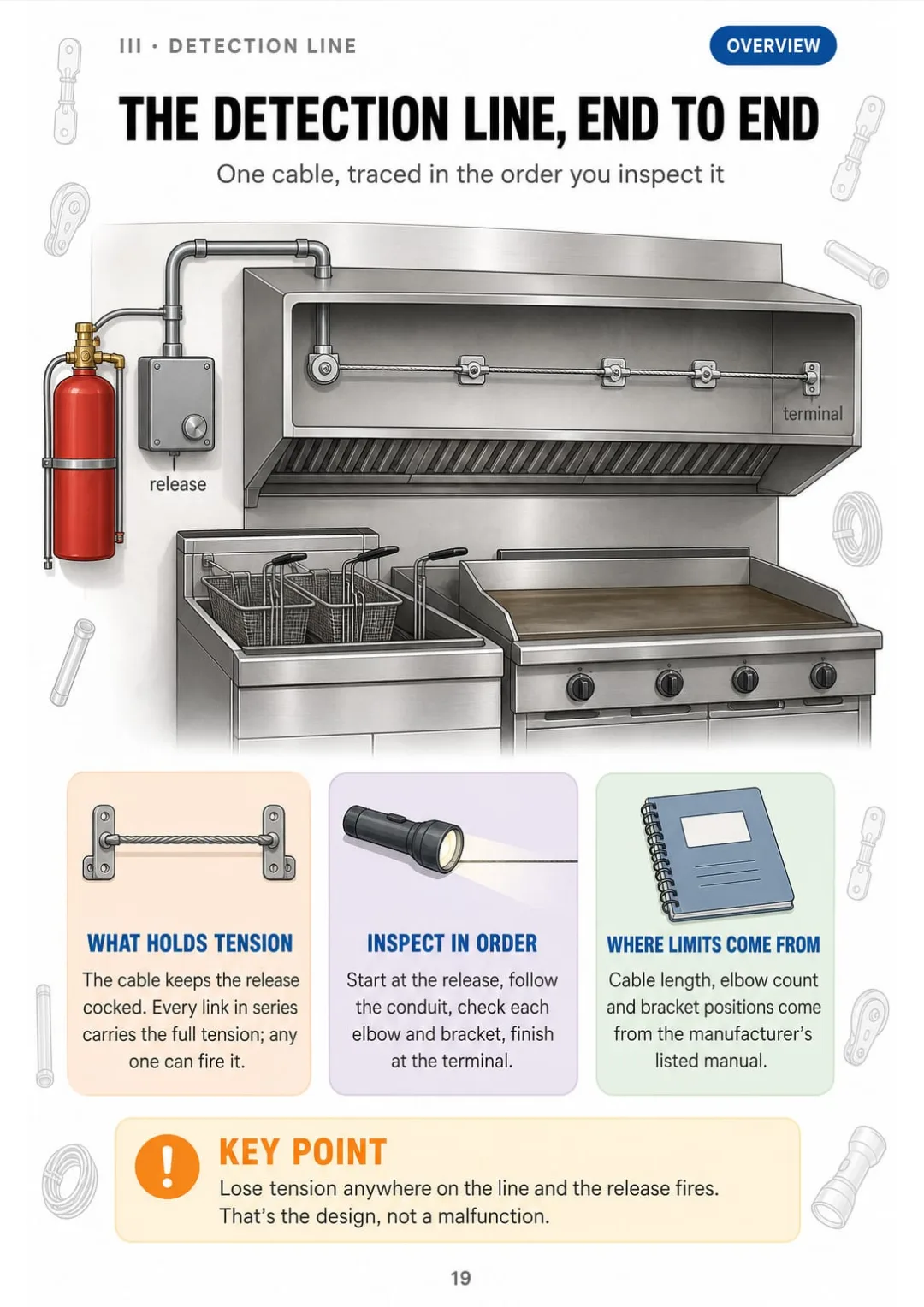
In the book, the detection line is one drawing: release, conduit, pulley elbows, link brackets, terminal. You trace it with your finger, the same way the cable runs.
The same goes for the agent cylinder, the piping path, the plenum and duct nozzles, the shut-offs and the semiannual service: each one has its own page.
You see it, you understand it, and you open the listed manual already knowing what you're looking for. Whether it's the exam or a cook waiting to get the line back.

The system at a glance, cylinder and release, the detection line, piping and nozzles, appliance by appliance, shut-offs and interlocks, the semiannual service step by step, and deficiencies and review: 65 pages, all illustrated.
Think of it this way:
The cook line changed over the weekend: the fryer now sits where the griddle used to be. You need to know if the nozzle above still covers it.
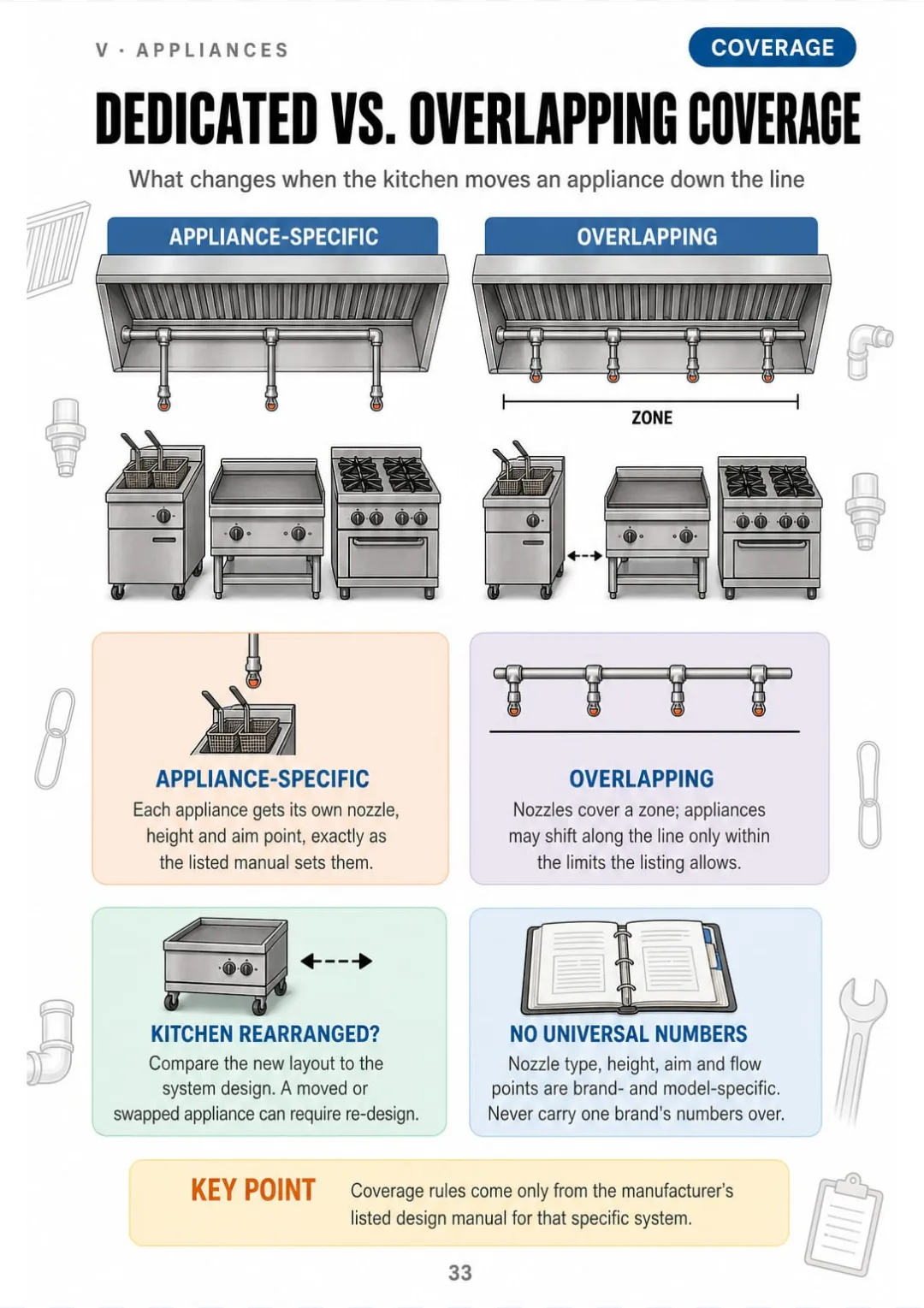
You open the page on dedicated vs. overlapping coverage and see both setups drawn side by side, with what the listing allows when the line changes.

Same with the detection line, the agent cylinder, the mechanical gas valve, the manual pull station and the 8 service steps: each one on its own page.
Kitchen Hood Suppression Illustrated is 65 pages in 8 parts, all drawn, and at the end you get the intervals on one page, the topics to review before the exam and a field checklist for the truck.
What you see drawn, you don't have to memorize.
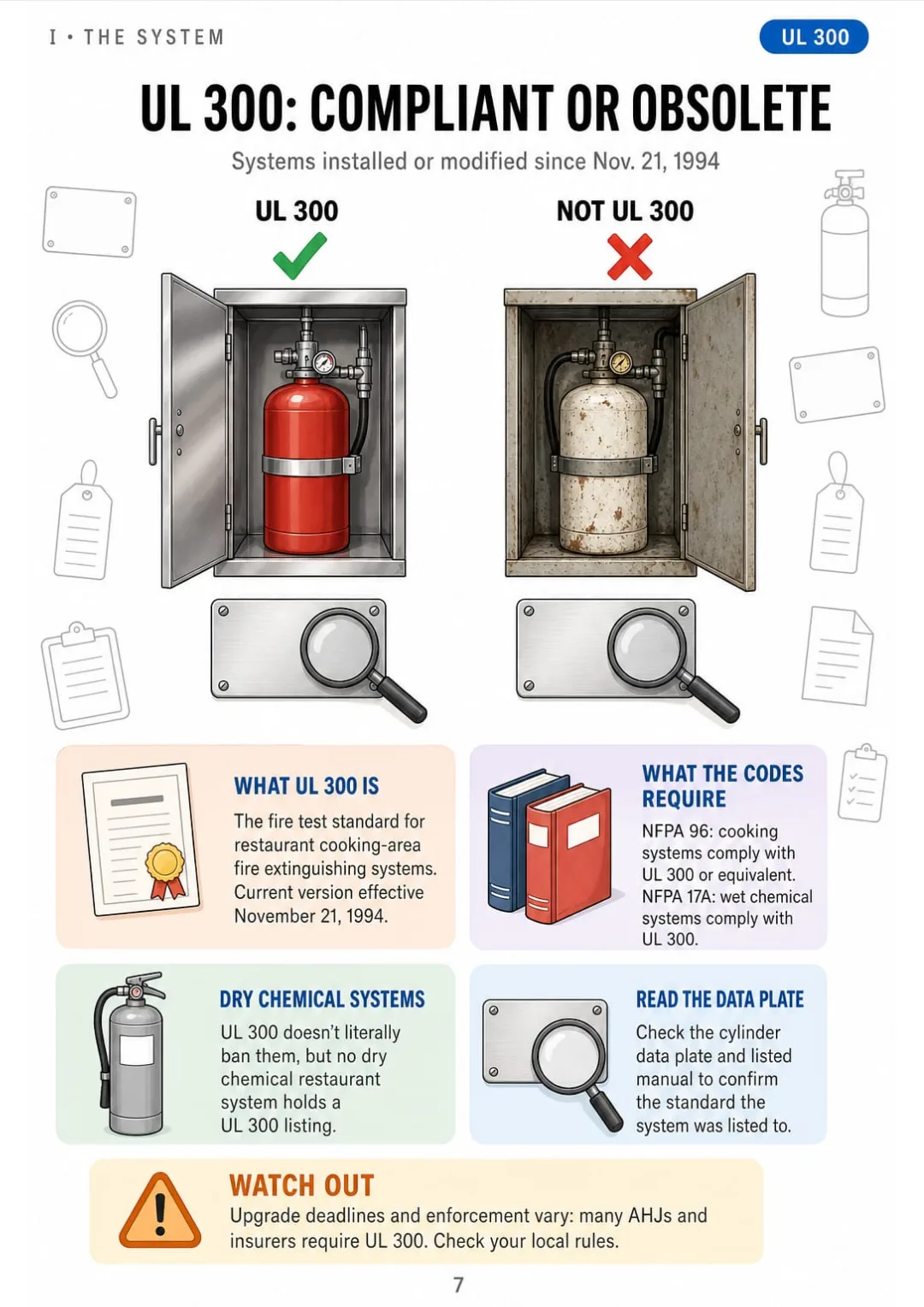
The whole system in one drawing, why wet chemical works, UL 300, which standard says what, why the listed manual always wins and how state licensing usually works.
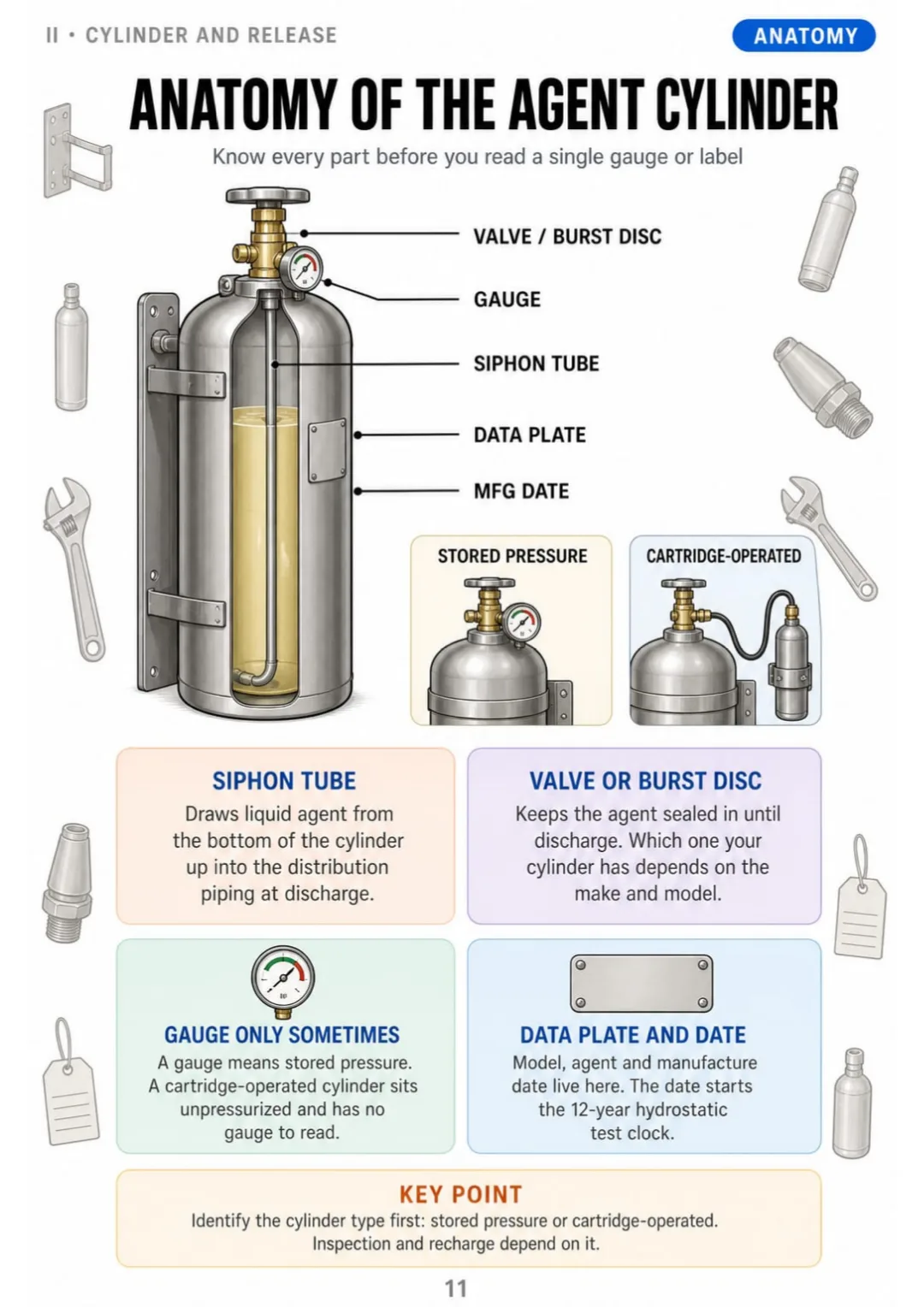
Agent cylinder anatomy, stored pressure vs. cartridge-operated, the expellant cartridge, the regulated release, mechanical vs. electric release, flow points and hydrostatic test dates.
The detection line from release to terminal, how a fusible link fires the system, link temperature ratings, where links go, pulley elbows and conduit, link replacement and electric heat detectors.
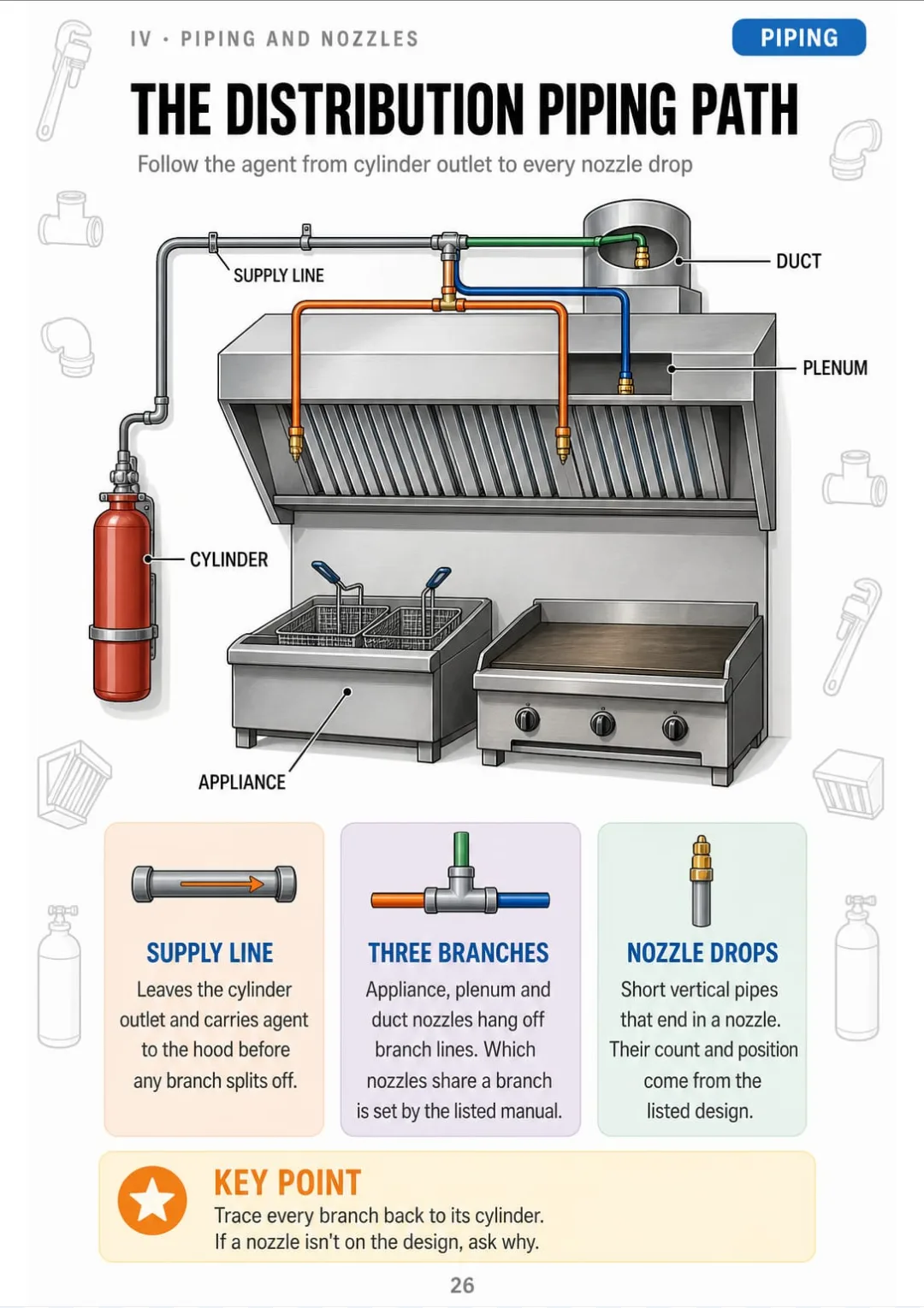
The distribution piping path, pipe rules set by the listing, nozzle anatomy and flow numbers, blow-off caps, duct and plenum coverage, appliance nozzle height and aim point.
Dedicated vs. overlapping coverage, then fryer, griddle, range, charbroiler, upright and salamander broilers, wok range, chain broiler, conveyor pizza oven, solid fuel and tilt skillets.
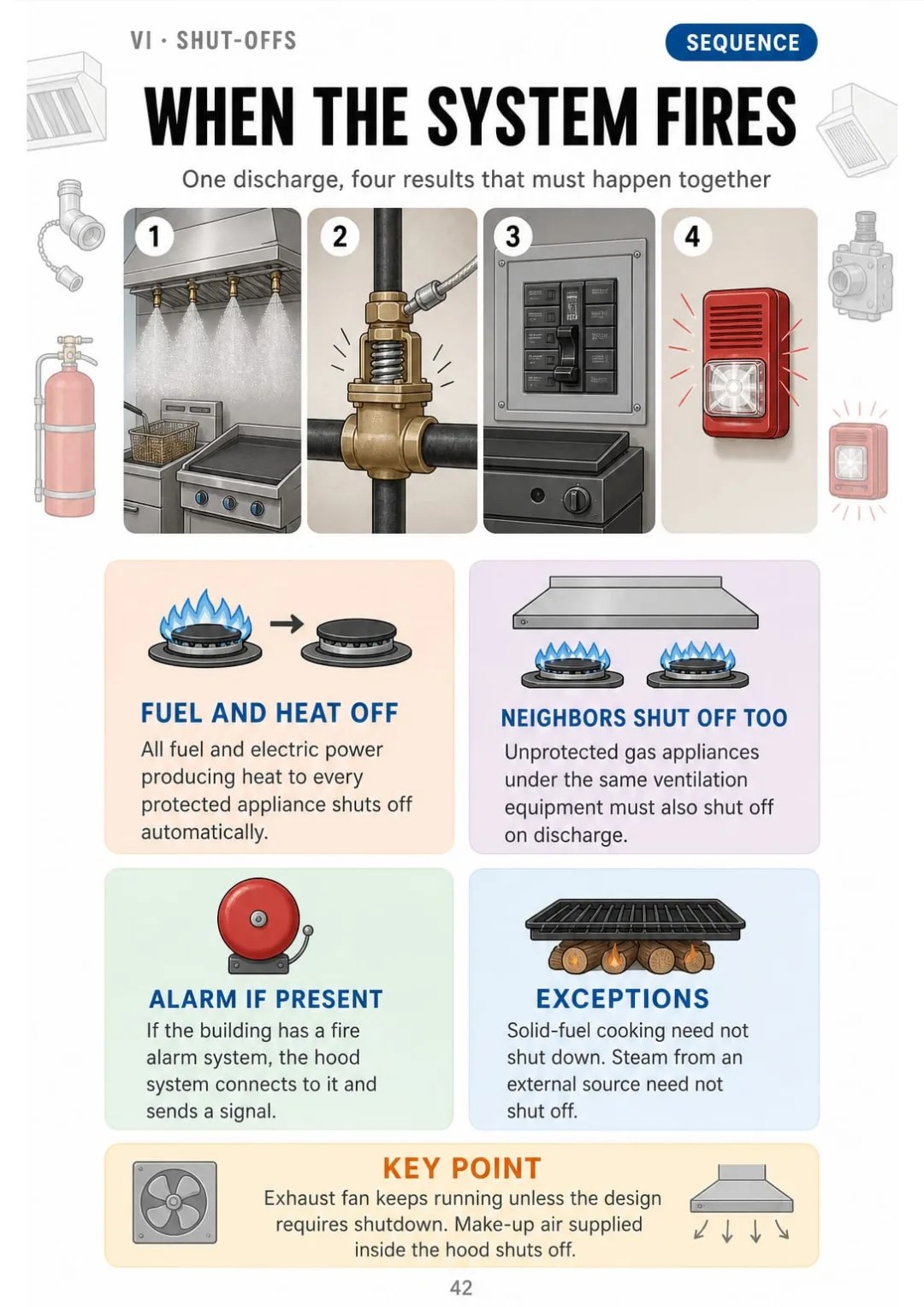
What must happen when the system fires, the mechanical and electric gas valve, the reset relay, electrical shut-off, the manual pull station and the Class K extinguisher with its placard.
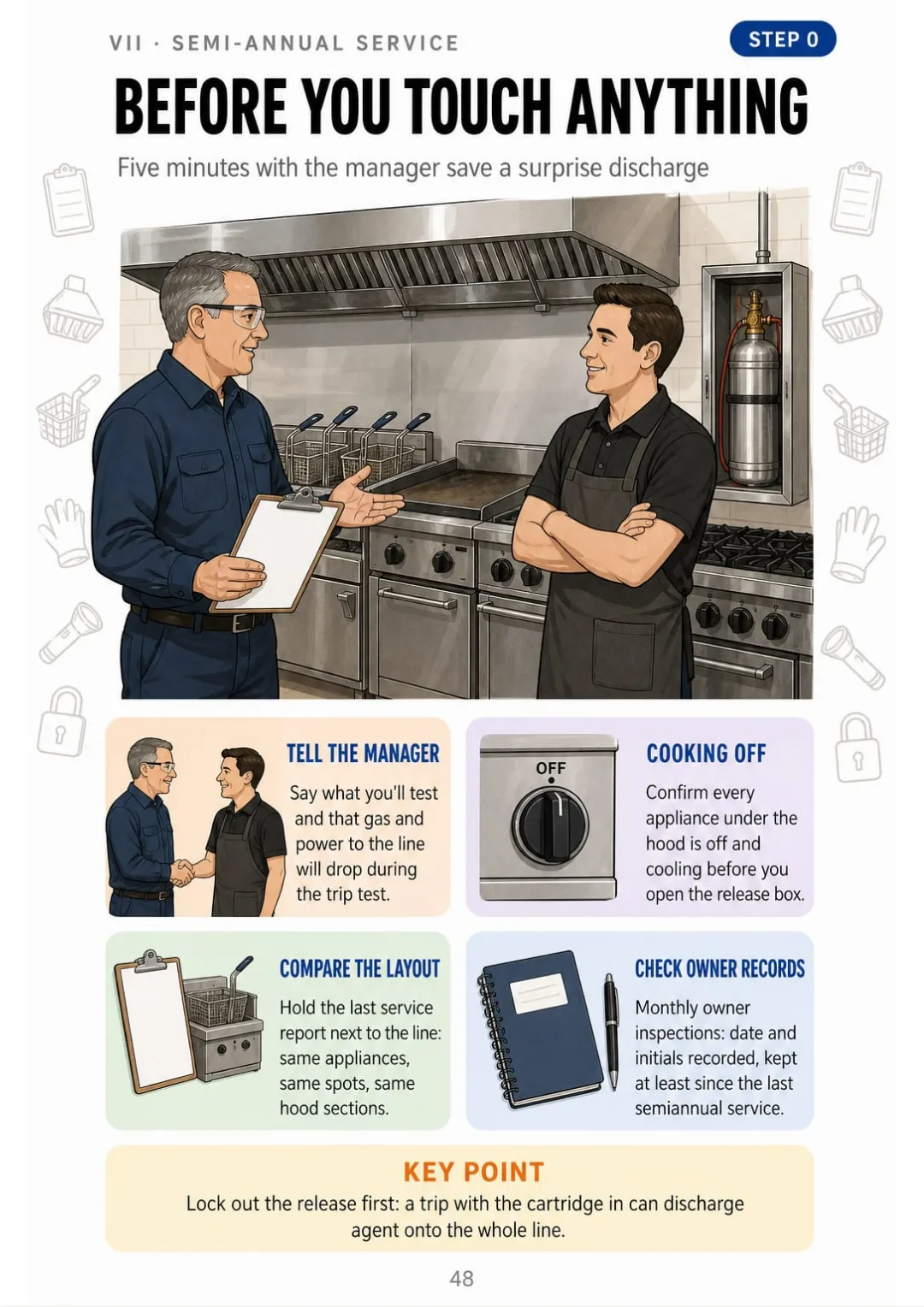
The semiannual service in 8 numbered steps, always in the same order: from lockout and cartridge removal to the trip test, the reset, the tag and the report, plus recharge after a discharge.
15 frequent deficiencies wrong vs. right, hood, filters and cleaning frequency, the intervals and numbers on one page, the topics to review before the exam, talking to the manager and a field checklist.
At the end of the book: The intervals and numbers on one page, the topics to review before the exam and a field checklist for the truck.
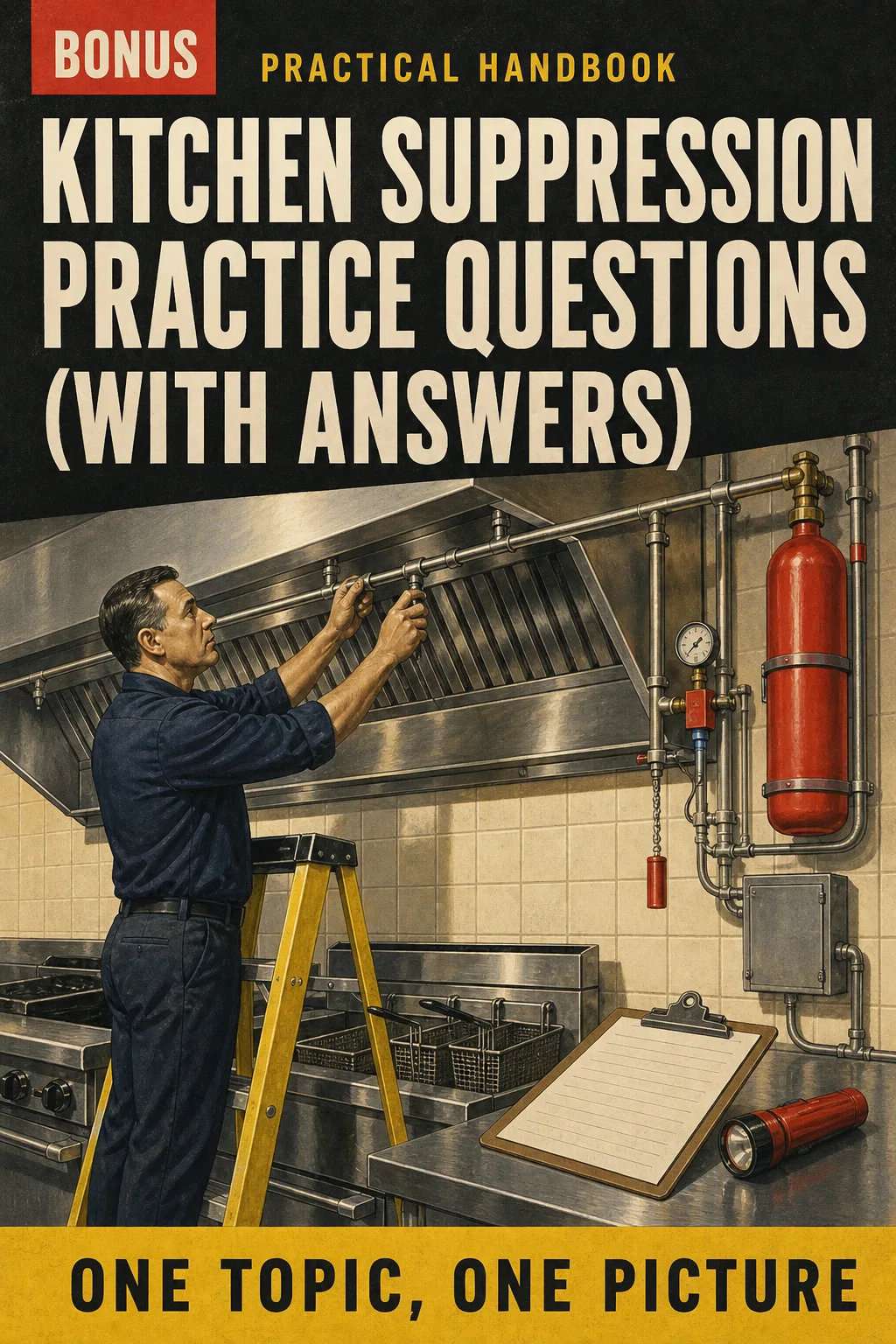
Exam-style questions on links, nozzles, shut-offs and service intervals, each answer explained in one or two lines, so you find your weak spots before test day.

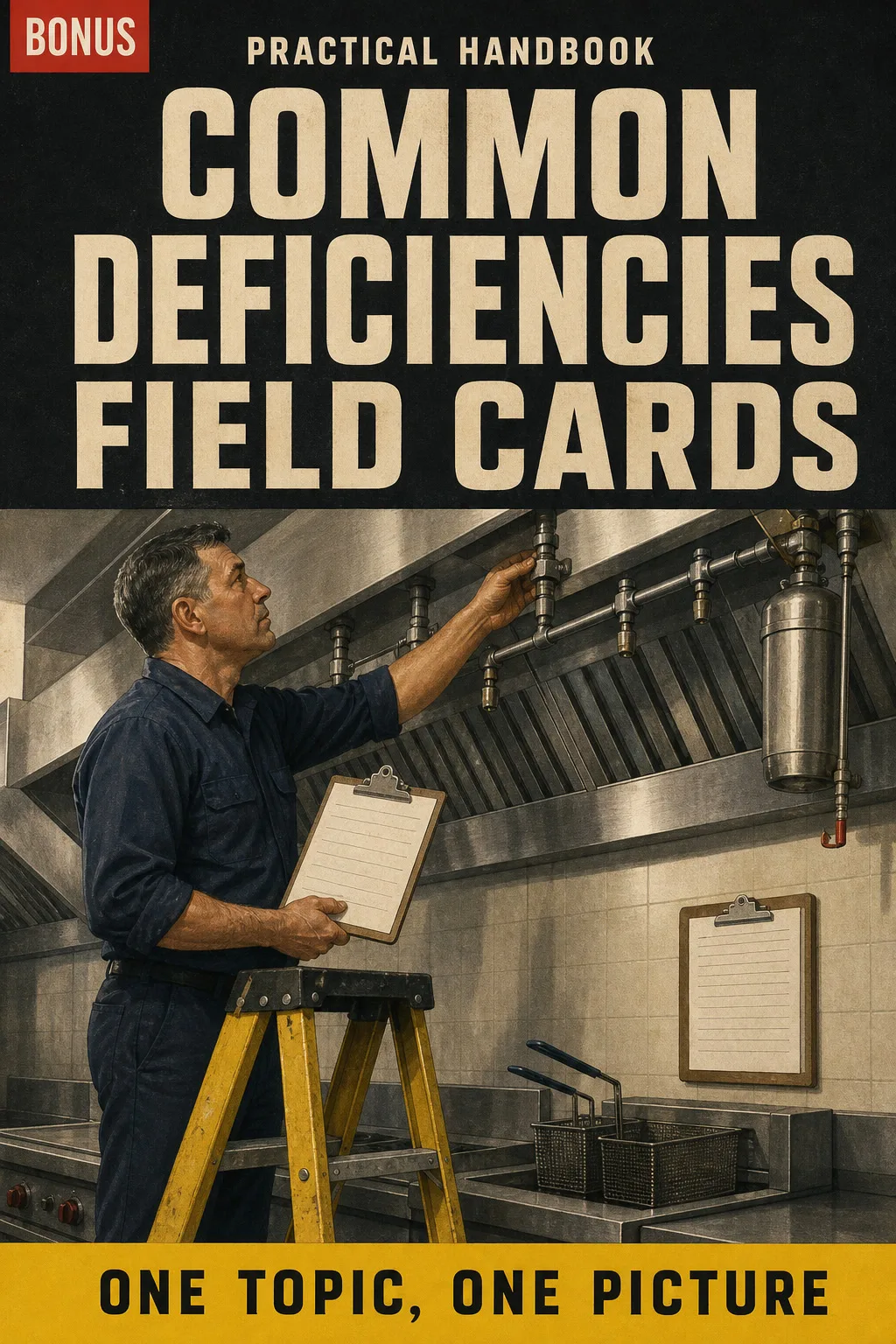
One printable card per deficiency, with what it looks like and how to correct it, to review in 5 minutes or keep in the truck.
📄 This is a digital PDF book sent to your email: nothing is printed or shipped.
PDF by email: We email you Kitchen Hood Suppression Illustrated as a PDF, together with the two free books. It's a single payment: no installments, no extra charges.
You already know cylinders and gauges. The book shows you the rest of the kitchen system, from the release to the last nozzle, one page at a time.
You review links, nozzles, shut-offs and intervals in the same order every night, and test yourself with the practice questions before exam day.
You print the pages you need, keep them in the truck and check coverage, links and the 8 service steps with the drawing in front of you.
📄 This is a digital PDF book sent to your email: nothing is printed or shipped.
Try Kitchen Hood Suppression Illustrated for 30 days, bonus books included.
We refund everything if the file won't open, if the book isn't what you see here, if you were charged twice or if the email doesn't arrive. Just email us.
You pay once. No subscriptions.
Yes. It doesn't start with what fire is: it starts with the whole kitchen system and follows it from the cylinder to the nozzle, the shut-offs and the semiannual service.
From NFPA 17A, NFPA 96, UL 300 and NFPA 10 for Class K portables. Editions and listings change, so every code value carries a VERIFY mark: you check it once against the current edition, your manufacturer's listed manual and your state's rules, and you know it's the number that applies to you.
No. It's an independent illustrated study book. It isn't published or endorsed by NFPA, UL, any manufacturer or any state fire marshal's office, and it doesn't give you a certificate, a license or training hours: it's material to study and review.
No. Design, installation and service always follow the manufacturer's listed manual and the authority having jurisdiction (AHJ). The book isn't tied to one brand: it draws the parts and the logic that listed wet chemical systems share, in the same order every time. Nozzle types, flow points and pipe limits for your system come from your manual, and the book tells you where to look for them.
No. They were written for this book to help you find your weak spots. They are not official questions from any state exam.
The book and the 2 bonus books arrive as a PDF by email, at the address you enter at checkout.
No. It's a one-time payment.
Yes. It's a PDF you can print, all of it or just the pages you need, and keep in the truck.
You have 30 days. We refund everything if the file won't open, if the book isn't what you see on this page, if you were charged twice or if the email doesn't arrive: just email us.
No more rereading the manual and forgetting it by morning.
The detection line: you see it drawn, and you've got it.
You walk into the exam or the kitchen knowing where everything is.
Drawings make studying faster.
The book is right below.
One-time payment: US$ 27 · Guarantee: 30 days · PDF by email
YES, I WANT KITCHEN HOOD SUPPRESSION ILLUSTRATED FOR US$ 27📄 This is a digital PDF book sent to your email: nothing is printed or shipped.